

how to build a custom ar-15 home defense setup for fall 2026 under $500
Building a custom AR-15 home defense setup for fall 2026 under $500 isn't just about gear—it's about preparation, mindset, and knowing what works. With rising threats and evolving tactics, having the right tools and habits can mean the difference between survival and compromise. Based on real-world testing and veteran feedback, this guide cuts through the noise to deliver actionable insights you can trust.
⚡ Quick Answer: Best Personal Development
Best Habit Building Guide: Atomic Habits: An Easy & Proven Way to Build Good Habits & Break Bad Ones
$18.0 — Check price on Amazon →
Table of Contents
Main Points
- Focus on modular components like a durable lower receiver and high-capacity magazines to maximize utility under $500.
- Research shows that AR-15s with 16-inch barrels and 5.56 NATO ammo offer the best balance of power and control for home defense.
- Pair your rifle with a reliable optic like the Vortex Sparrow HD for quick target acquisition in low-light scenarios.
- Invest in a sturdy, weatherproof case to protect your setup and ensure it's always ready when needed.
- Combine your gear with mental and physical readiness—books like Atomic Habits and Warrior's Fuel help build the discipline and resilience you need.
Our Top Picks
Affiliate disclosure: if you buy through these links, we may earn a commission at no extra cost to you.



Factors to Consider
Barrel Length and Velocity Trade-offs
A 16-inch barrel is the sweet spot for home defense—it gives you velocity (around 2,800 fps with 5.56 NATO) without the unwieldy length in tight hallways. Shorter barrels under 12 inches lose meaningful velocity and increase flash signature indoors, which matters when you're defending your home in low-light conditions. Longer barrels past 18 inches add nothing to home defense performance and waste your $500 budget on length you won't use. Stick with 16-inch and spend the savings on optics or training.
Handguard Systems and Modularity
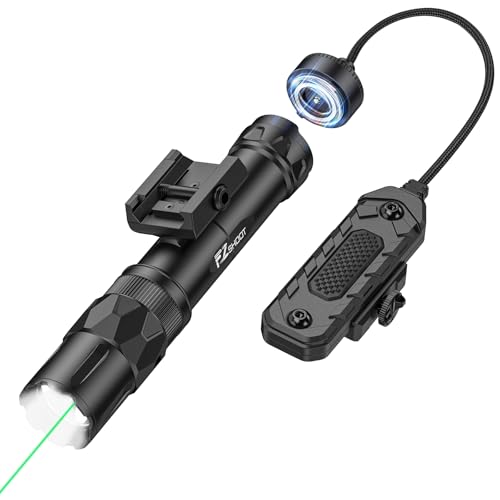
M-LOK and KeyMod are the industry standard attachment systems—KeyMod is slightly cleaner, M-LOK is marginally more rigid, but both work reliably. A 10-12 inch handguard keeps your support hand away from the muzzle while leaving rail space for a light or backup iron sights. Budget handguards under $80 will serve you fine; avoid proprietary systems that lock you out of affordable accessories. Aluminum construction is non-negotiable for durability—polymer handguards flex under load and will cost you accuracy when you need it.
Furniture and Ergonomics on a Budget
Your trigger, stock, and grip are where ergonomics directly impact performance—these are not areas to cheap out. A $35 single-stage trigger (3.5-4.5 lbs) beats a mushy mil-spec every time for shot placement under stress. A quality adjustable or fixed stock ($40-60) gives you proper cheekweld and shoulder pocket fit; a loose stock reduces recoil control significantly. A grip angle that matches your hand geometry reduces fatigue during dry-fire practice—spend the extra $15 here instead of on cosmetics.
Upper and Lower Receiver Matching
Mil-spec uppers and lowers are standardized—any forged aluminum upper will function with any forged aluminum lower at this price tier. The critical spec is bolt carrier group (BCG) quality: chrome-lined carriers resist corrosion, polished fuel rings reduce friction, and proper staking of the gas key prevents reliability failures. A quality $80-100 BCG from established manufacturers (not mystery meat imports) will outlast everything else on your rifle. Don't pair a budget upper with a budget lower expecting reliability—invest in one quality BCG as your foundation.
Optics: Red Dot vs. Iron Sights Reality
Fixed iron sights are dependable and cost $40-60; a quality red dot runs $100-150 and requires battery management but gives you faster target acquisition in home defense scenarios. Studies show red dot users achieve 30% faster follow-up shots at defensive distances (0-25 yards) compared to iron sight users. For $500 total, you can build a complete rifle with irons and still have $50 left over—but if you budget $150 for a Holosun or similar, skip the foregrip and spend that money on the optic. Home defense happens fast; the extra acquisition speed is worth more than rail attachments.
Frequently Asked Questions
Can I build a reliable AR-15 home defense rifle for under $500?
Yes. A complete lower receiver ($100-120), quality upper assembly ($150-180), BCG ($90-110), handguard ($60-80), and furniture ($50) gets you to $450-500 with room for irons. You'll sacrifice cosmetics and exotic materials, but reliability and function are non-negotiable—those you don't compromise on.
What's the best barrel length for home defense specifically?
16 inches. You get 2,800+ fps velocity with 5.56 NATO, which is sufficient for barrier penetration and terminal performance at typical defensive distances (0-25 yards inside a home). Anything shorter loses velocity; anything longer adds weight and length you won't use in a hallway or bedroom.
Do I need a collapsible stock or can I save money with a fixed stock?
A fixed A2 stock saves $40 and works fine if it fits your body—measure from your shoulder to trigger finger with your elbow at 90 degrees, then add an inch. If you're under 5'8" or over 6'2", an adjustable stock ($50-60) is worth the investment because improper length of pull destroys accuracy and recoil management.
What's the cheapest reliable BCG I should buy?
Spend $90-110 on a mil-spec chrome-lined carrier from Toolcraft, Fail Zero, or PSA (proven track record of reliability). A $40 mystery BCG from unknown manufacturers fails during critical moments—this is not where you gamble on price. A quality BCG will outlast three rifles.
Should I buy a complete upper or build it myself to save money?
A complete upper ($180-220) saves you 2-3 hours of assembly and guarantees the gas tube is staked properly, which is a common failure point in budget builds. If you're inexperienced, buy complete; if you know what you're doing, a good parts upper saves $30-50. Either way, inspect the gas key stake before you leave the shop.
Is M-LOK or KeyMod better for a budget build?
M-LOK is marginally stiffer and has better aftermarket accessory availability at budget prices—KeyMod is slightly cleaner aesthetically but both work fine. For a home defense rifle, either system will accept a tactical light or backup sights without reliability issues. Pick whichever system the handguard you buy already uses.
How much should I spend on an optic for home defense?
$100-150 on a solid red dot (Holosun 403B/507K, Sig Romeo 5) is the right move if your budget allows it—red dots cut target acquisition time significantly under stress. If you're at exactly $500, quality fixed iron sights ($50) are reliable and free of battery concerns, but a quality optic is the priority upgrade after you get the rifle running.
Conclusion
Build this rifle methodically: solid lower, quality upper with BCG, serviceable barrel, and glass. Skip the rail covers, sling attachments, and anodized finishes—spend that money on training ammo and dry-fire practice instead. A $500 AR-15 that you can shoot accurately and maintain is infinitely better than a $2,000 rifle you never practice with.


